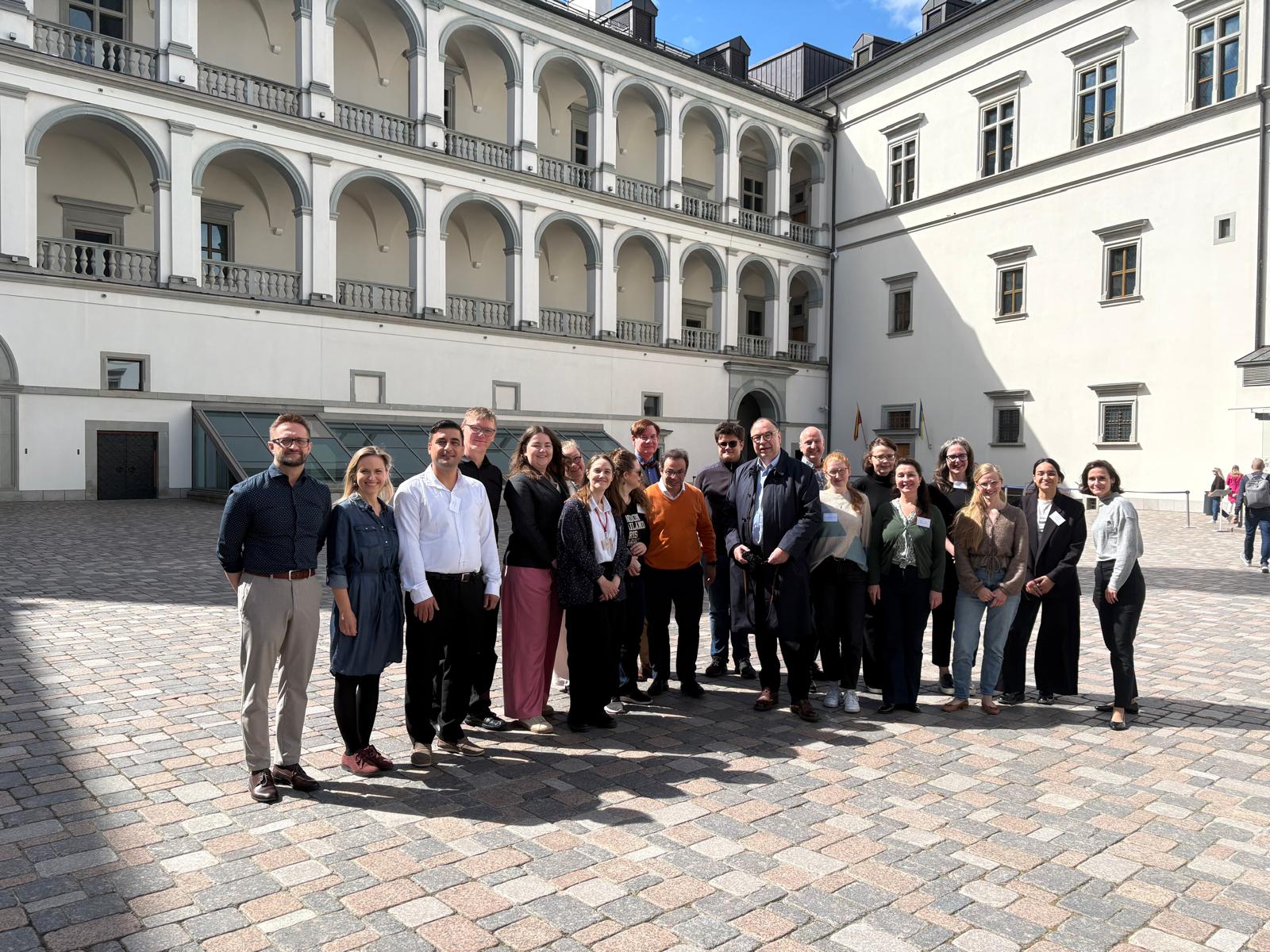
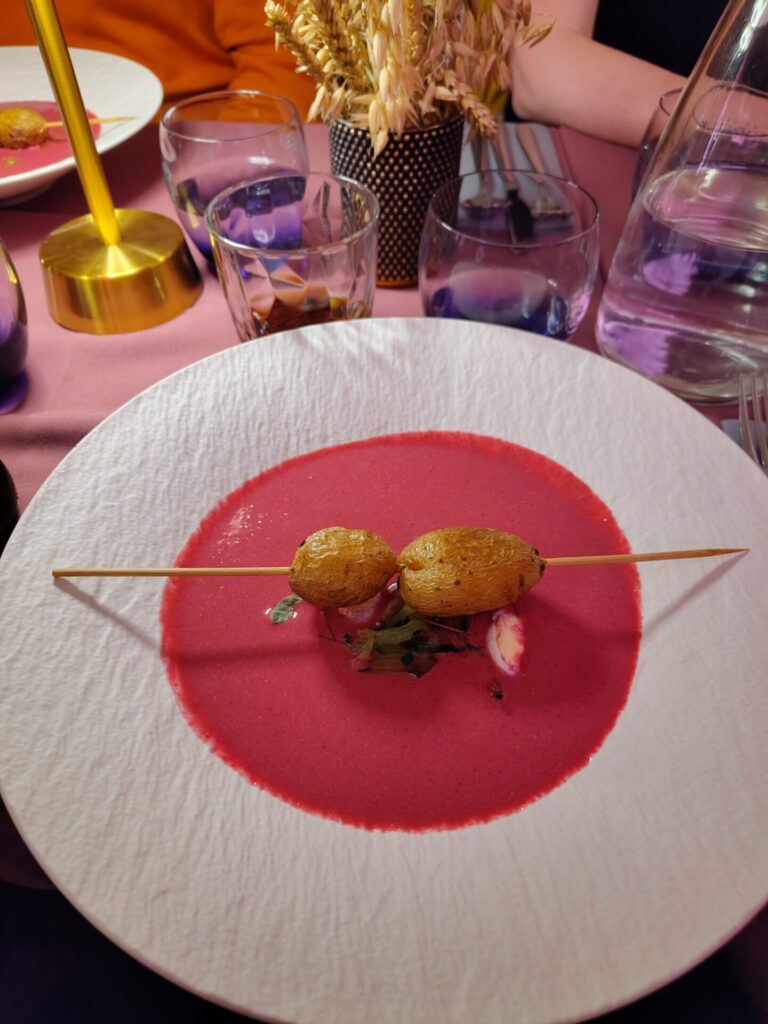
The organisers of the workshop Hungry for Data: Studying Court Dining and Using Sensor(y) Data, held on 28–29 May in Vilnius as part of the COST Action CA24164 – Sensing Europe’s Court Spaces at the Crossroads of Past, Present and Future, could hardly have chosen a more fitting time and venue. While participants gathered in the former Palace of the Grand Dukes of Lithuania to discuss the sensory dimensions of court dining, the city of Vilnius was celebrating one of its best-known culinary symbols through the Pink Soup Festival. Featuring the traditional šaltibarščiai, a cold beetroot soup documented since the eighteenth century, the city itself became the stage for a vibrant, collective sensory experience. In doing so, it provided an illuminating and unexpectedly apt commentary on the questions raised during the workshop concerning the sensory turn.
Spaces of Court Dining
Drawing primarily on the example of the early modern Swedish court, Fabian Persson outlined court dining as a multisensory Gesamtkunstwerk (total work of art) and an integral component of courtly order. In this perspective, court dining emerges as a central interdisciplinary field within Court Studies. Subsequent talks explored the spatial and architectural settings of court dining as well as Digital Humanities methods for investigating multisensory perception.
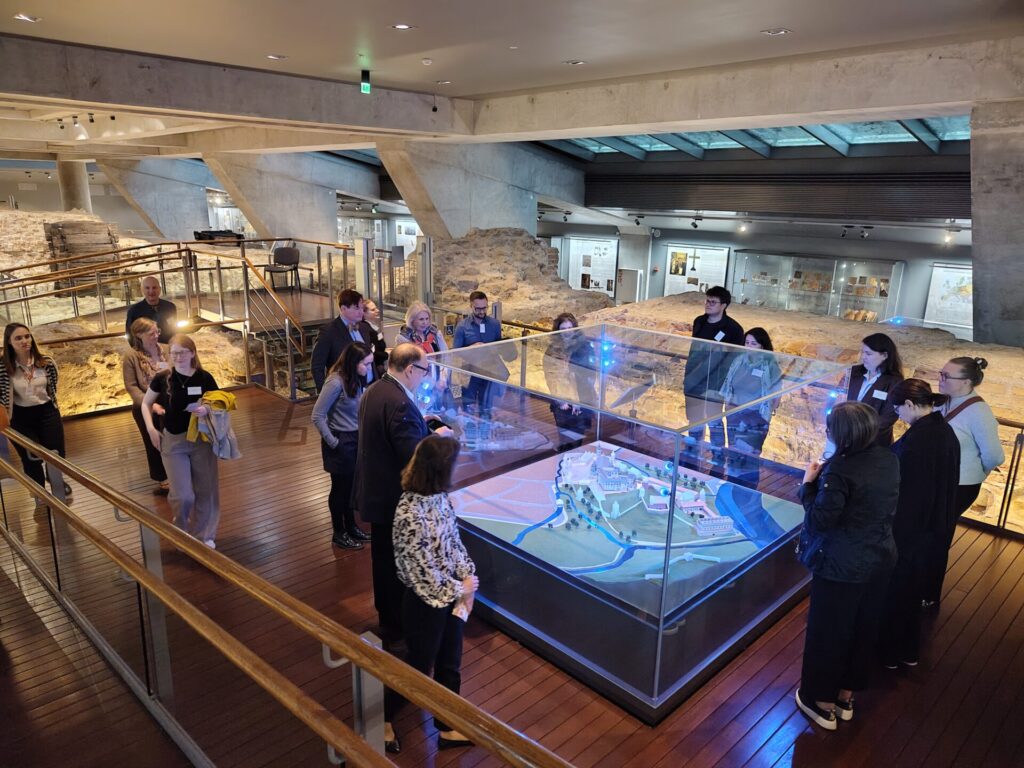
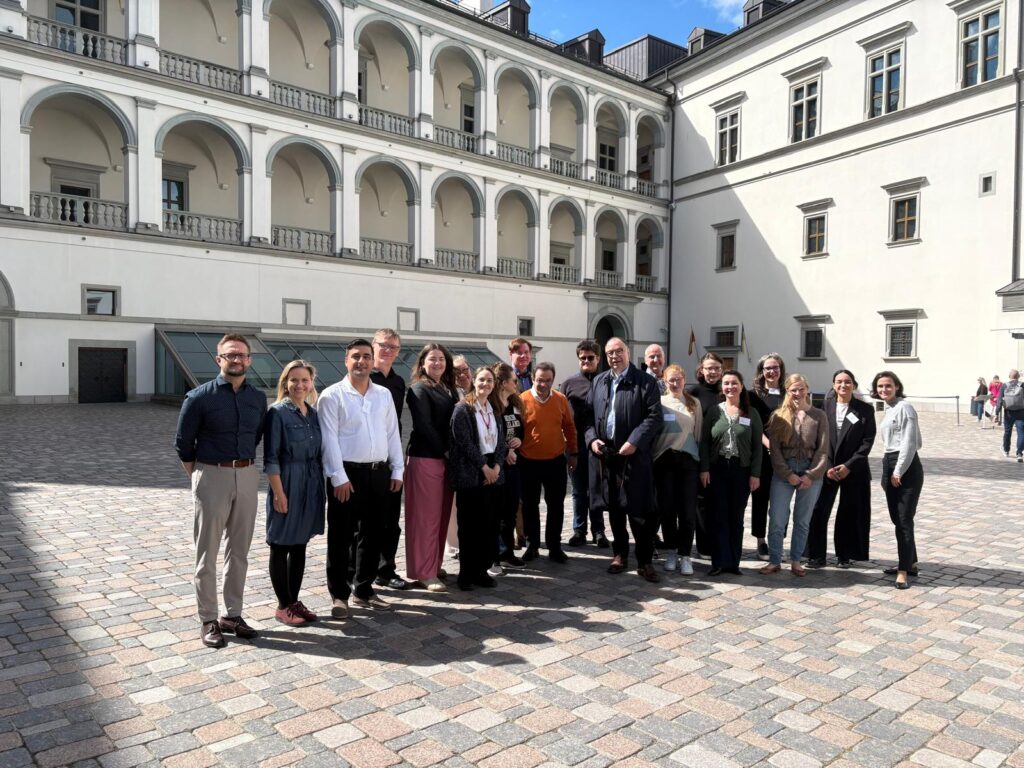
With regard to dining rooms in early modern palace architecture, Meike Wiedemann-Naaborg identified a shared European architectural language expressed through different regional dialects. Using the declining importance of the communal hall after the sixteenth century as an example, she demonstrated how such spaces were gradually adapted to new patterns of use. Workshop host Rasa Leonavičiūtė-Gecevičienė characterised the Palace of the Grand Dukes in Vilnius as both a courtly and culinary space. The influence of architecture on sensory experience became especially evident during the guided tour of the reconstructed palace later that afternoon. Barbara Arciszewska presented the evolution of Wilanów Palace in Warszawa as a royal court residence from 1650 to 1892 and as a contemporary center for culinary reconstruction. This makes Wilanów the perfect venue for the COST Action conference in May 2027, for which Arciszewska promised an immersive sensory experience.
These architectural and sensory findings are increasingly accessible through digital methods. Frieder Leipold linked the preparation and serving of historical dishes with the creation of digital sound profiles. According to his findings, vaulted halls were comparatively noisy spaces, whereas dining in quieter chambers or salons developed into a privilege, accompanied, among other sounds, by the bright resonance of porcelain. Mona Hess presented a range of digital heritage technologies, including 3D laser scanning, acoustic and thermal modelling, and spatial-geographic data models. These tools make it possible to investigate spatial relationships, air circulation, and temperature conditions during communal dining.
The considerable potential of structured data analysis and AI-assisted workflows in digital art history was highlighted by Stephan Hoppe and illustrated through Max Kristen’s presentation of the Corpus of Baroque Ceiling Painting (CbDD). Originally established in 1976 as an analogue documentation project, the initiative has recorded and published ceiling and wall paintings from more than 4,000 heritage sites dating from 1550 to 1800. These publications have now been transformed into a 3D knowledge graph, which can be explored via an AI agent to investigate the spatial design of historical palaces and residences.
The Court Table as a Sensory Environment
Fatma Serra İnan examined the sensory order of dining at the Habsburg court through the analysis of ceremonial diagrams, which she described as spatial-sensory datasets. These sources demonstrate the significance of where one was seated and beside whom at the table. Anna Kalinowska emphasised the importance of data harvesting for the study of dining practices at early modern European courts. Diplomatic history, in particular, provides exceptionally favourable conditions owing to its rich and diverse body of sources. Sarah Fox presented her analysis of more than 40,000 dishes served at the British royal court between 1760 and 1820, showing how shared meals became a medium through which values such as family, nationhood, and identity were negotiated.
The next panel focused on the social and economic foundations of courtly taste. Esther Hoppe-Münzberg presented the electoral apartments in the Dresden Stallgebäude as a space of courtly hospitality in which communal dining within a collection space occupied a central role and should be regarded as being of equal importance to the collection of high-quality horses. Mario Kliewer introduced research on the aesthetics of taste at the Dresden court and the resulting establishment of the German Archive of Culinary History at the SLUB Dresden. Drawing on the example of the Royal Saxon Court Purveyors, he demonstrated how practices of food quality assessment shaped culinary aesthetics at the Saxon royal court between 1850 and 1900.
Dining extends far beyond taste alone: Tomasz Sawoszczuk presented his method of olfactory reconstruction, through which smells can be recreated from historical kitchen utensils or famous works of art, such as Lady with an Ermine, and subsequently adapted for public interpretation. Ismail Kugu illustrated how European porcelain transformed both the material and olfactory dimensions of dining and coffee culture at the eighteenth-century Ottoman court. This is particularly evident in the large number of cups made from European porcelain—among them many produced in Meissen—that remain today in the collections of the Topkapı Palace. Yago Mahúgo used historical keyboard instruments to create a range of digital soundscapes intended to reconstruct the sonic environments of court dining. Table music, he argued, did not occupy a central position but primarily served as entertainment during meals. Finally, Lana Domšić demonstrated how modelling taste as sensory data can be operationalised for heritage interpretation and museum education.
Conclusion
The workshop in Vilnius demonstrated how the study of court dining is currently undergoing a significant transformation. Dining no longer appears as a peripheral phenomenon but rather as a complex sensory practice in which spatial, social, and material dimensions are inseparably intertwined and increasingly accessible through digital methods. At the same time, the sensory turn is entering a new phase. Data-driven reconstructions and digital models offer promising ways of approaching historical sensory experiences, revealing previously hidden connections and creating new opportunities for comparison. The combination of Digital Humanities, sensory studies, and practical forms of public engagement opens valuable new perspectives for the study and interpretation of European court cultures. Moreover, the methodological approaches presented in Vilnius are likely to provide important impulses for the COST Action conference on court dining, scheduled for May 2027 at Wilanów Palace in Warszawa.
Dr. Mario Kliewer
Museum scientist Albrechtsburg Castle Meissen
Staatliche Schlösser, Burgen und Gärten Sachsen gemeinnützige GmbH